
Blowing off Steam
Hamas rehearsed the 7 October attack in the open, on camera, for two years. Israeli intelligence watched — and concluded it meant nothing.

This is an excerpt from my forthcoming book, The War in Gaza: 7 October and its Aftermath (Pen & Sword). Last week’s post described the intelligence picture Hamas assembled and the plan it refined phase by phase. This week, the final piece before the attack itself: the force built to carry it out. How Mohammed Deif personally selected and trained the Nukbah; how paraglider kits smuggled through Egypt prepared the first military paraglider assault in history; and how Sinwar staged the rehearsals in plain sight — in a fishbowl under constant Israeli surveillance — feeding his enemy exactly what it wanted to believe.
While Sinwar was courting Iran, Mohammed Deif was building the force that would carry out the attack.
In early 2022, Deif dispatched his most experienced commanders to camps in Lebanon and Iran where they were trained by Quds Force operatives. His goal was to create a cadre of instructors who could subsequently train hundreds of Hamas fighters in the combined arms tactics that would enable them to breach their way out of Gaza and into the bases and kibbutzim beyond the wire.
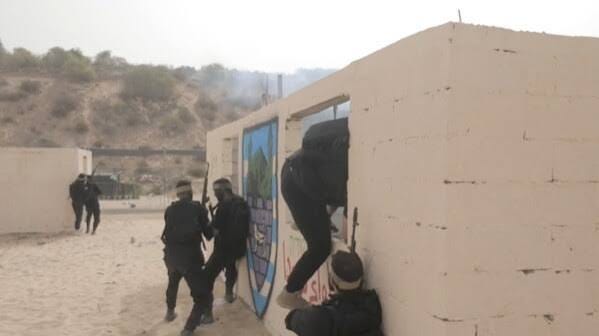
The plan, completed in late 2021, called for a barrage of rockets at the outset of the attack, drones to knock out the security cameras and automated machine guns along the border, and gunmen to pour into Israel en masse – in paragliders, on motorcycles, and on foot. Deif and his lieutenants directed the construction of two life-sized terrain models: one a mock Israeli settlement, the other replicating part of the Israeli base at Re’im where the Gaza Division was located. They used these for the second of the four Strong Pillar training exercises – practicing how to breach their way in, neutralise the guard force, and locate hostages. Videos of the exercises were used to conduct debriefs.
It was Deif who had the idea of using paragliders as part of the plan to breach the Gaza border. They would cross under the cover of the opening rocket barrage. Although slow and loud, they had a relatively short distance to cover, and Deif argued that with rockets providing a distraction they would not be exposed to Israeli border defenses long enough for effective countermeasures to be employed. Sinwar agreed and gave the go-ahead.
Working with contacts in Egypt, Hamas smuggled into the strip about a dozen kits enabling them to build powered paragliders – an innovation that would mark the first known military use of such aircraft. By early summer 2022, a dozen were fully assembled. Four were twin-person paragliders, with the rear occupant flying the aircraft and the armed front passenger acting as observer and assault element. The single-person models had the engine and propeller mounted directly on the pilot’s back beneath a parachute canopy.
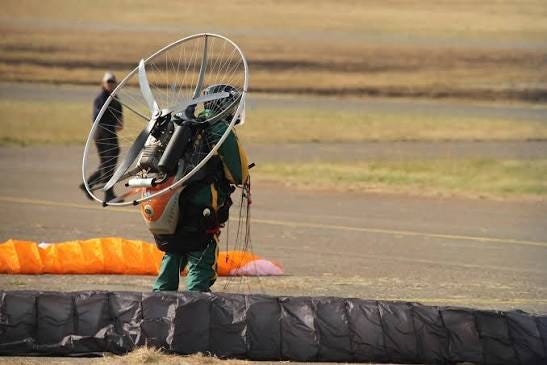
Radar systems function by bouncing waves off metallic objects. Most systems cannot reliably detect targets at altitudes below 500 feet – especially against a backdrop of high-rise buildings. The paragliders contained almost no metal, and would fly no higher than 300 feet above the ground.
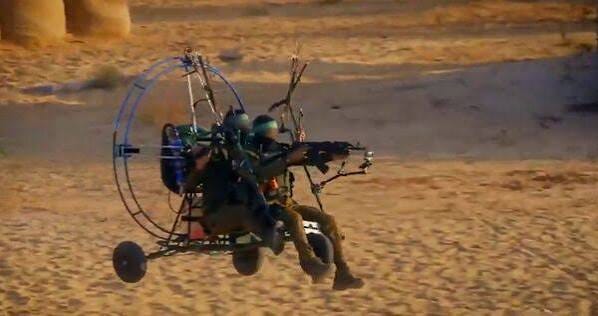
Deif selected thirty of his best fighters to form the Eagle Squadron and found a strip of beach on which to practice. In August they began landing in a mock kibbutz at a training site north of Rafah. The success of the exercise led Deif to acquire more paragliders, and over the following months a dozen more were smuggled into the strip.
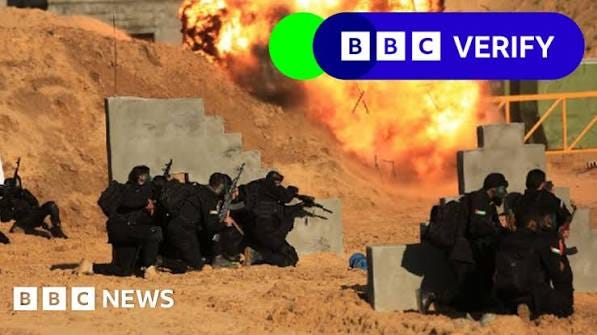
In some ways, Hamas appeared unconcerned with operational security. When the second Strong Pillar drill was held in December 2021, a Hamas commander announced that it would ‘tell the enemy that the walls and engineering measures on the borders of Gaza will not protect them.’ Another Hamas statement said the joint military maneuvers were designed to ‘simulate the liberation of settlements near Gaza.’ The Israelis may have dismissed all this as bravado – the type of loud showmanship they expected from Palestinian militants. Sinwar was counting on it.
He must have known that sooner or later the Israelis would catch wind of the exercises. Gaza was a fishbowl under constant surveillance from ground and air, and it would not be possible to conceal events that involved hundreds of fighters. So Sinwar did not try. Instead he led the Israelis to believe that the exercises were simply a way of blowing off steam. His years of studying his adversary had taught him not only how they collected information but how they were likely to interpret it. He understood Israeli assumptions about Hamas – perhaps better than the Israelis did – and fed them what they wanted to believe.
Although hundreds of fighters from Hamas and Palestinian Islamic Jihad participated in the training exercises, the full scope of the plan was kept to a handful of people: Sinwar himself; Deif; Mohammed Sinwar, Yahya’s brother and a key assistant to Deif; and, later, Rouhi Mushtaha, a Hamas leader close to Sinwar, and Ayman Nofal, a close associate of Deif and former head of the Qassam Brigades’ intelligence arm. Even Deif’s commandos were unaware of any clear attack plan.
For the deception to work, Sinwar needed to manage what Israel believed about his intentions. After the 2021 conflict, the Israelis had doubled down on the assumption that Hamas’s real concern was administering Gaza, not waging war against Israel. They offered economic incentives – thousands of permits so Gazans could work in Israel or the West Bank, where salaries in construction, agriculture, and service jobs were ten times the level in Gaza. In turn, Sinwar sought to convince Israel that he cared more about jobs than confrontation. His public comments revealed appropriate resentment but apparent resignation. In a 2021 interview with Vice News, he said that while Palestinians did not seek war due to its high cost, they would not ‘wave the white flag.’ He supported temporary ceasefires with Israel, prisoner exchanges, and a reconciliation with the Palestinian Authority. He was even criticized by some opponents as too moderate. In the West Bank, Fatah published a statement in June 2022 accusing Hamas leaders of fleeing to Arab capitals to live in ‘luxurious hotels and villas,’ leaving their people to poverty in Gaza.
Shin Bet – Israel’s internal security service responsible for monitoring Gaza – had long prided itself on its ability to infiltrate and monitor Islamist groups. And it was getting no indications of an impending attack. This was mainly because Sinwar, acutely aware of Shin Bet’s capabilities, directed on pain of death that no one would discuss the plan by mobile phone.
In early 2022, militants from Islamic Jihad and new localized groups in the West Bank conducted a string of attacks in Israel. The IDF responded with a series of raids in the West Bank, resulting in the deadliest year for the territory since the second intifada. The IDF targeted Islamic Jihad militants in Gaza – but left Hamas alone. In turn, Hamas refrained from escalating, bolstering the assumption among Israeli officials that they could prioritise other threats over Hamas.
Why, given the concessions the Israelis had made after the 2021 conflict, was Hamas so determined to proceed? Part of the answer lies in the personalities of its leaders. But that does not explain why the organization’s political leadership – notably the more moderate Haniyeh – went along with the plan. In the official document explaining Operation Tufan Al-Aqsa that Hamas published on all its websites, several justifications for the attack are described. They include Jewish ascension to the Temple Mount; the presence of seven million Palestinian refugees in camps throughout the Middle East; the continuation of the Palestinian problem for seventy-five years; the settlements in the West Bank; and the detention of Palestinian prisoners. None of these reasons was new. No world-changing event obliged Hamas to launch an all-out war on Israel.
An analysis of Hamas websites and seized internal documents points to a more specific objective: the prevention of a normalization agreement between Israel and Saudi Arabia. Minutes from an October 2023 politburo meeting depict Hamas leaders bemoaning the improvement in relations between Israel and the Arab Gulf states, a trend that would ‘open the door for Arab and Islamic countries to descend on the same path, and will increase the complications of the resistance project.’ This goal was also a distinct Iranian interest. Hamas was well aware of the Palestinian sacrifice that would be required. Palestinian deaths, including many civilians, were seen as a necessary cost of any path toward independence.
Around the same time, Sinwar ordered Deif to build within the Qassam Brigades an elite unit of several hundred fighters – the Nukbah Brigade. Deif took personal responsibility for their selection. Throughout 2022, he ran a series of exercises involving hundreds of fighters from Hamas and Islamic Jihad to assess and select those with the highest levels of physical and mental fitness and dedication to the cause. Once selected, these fighters were split into ten-man groups for specialist training: weapons handling, small unit tactics, and navigation as a baseline, followed by mission-specific skills. Some were trained as assault breachers – explosive experts whose job it would be to disable defensive surveillance systems and blow holes in the perimeter fences of army positions and kibbutzim. Others were trained as snatch squads, tasked with capturing hostages and getting them back to Gaza as quickly as possible. The drone unit developed further – learning to employ modified racing drones to destroy security cameras and communications nodes.
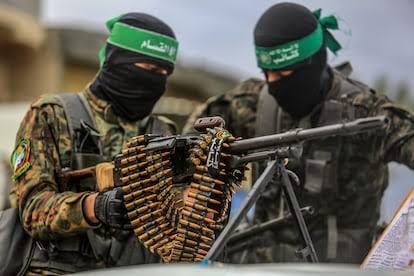
Fighters practiced on fourteen training sites across nine locations in Gaza. Hamas built a mock Israeli military base just 2.6 kilometres from the Erez crossing, dug several metres below ground level – perhaps to avoid immediate visibility from Israeli patrols, though the smoke from explosions would surely have been detectable, and the IDF was known to use aerial surveillance. The training continued throughout 2022. The next Strong Pillar exercise was held on 28 December, and propaganda images appeared on Telegram showing fighters clearing buildings, overrunning tanks, and storming the replica Israeli base.
The Israelis saw the images. They noted the exercises. And they concluded that Hamas was blowing off steam.
Next week — the attack itself.