
We Will Uproot this Monstrous Entity
Yahya Sinwar spent twenty-two years in Israeli prisons studying his enemy. Then he used what he learned.

This is an excerpt from my forthcoming book The War in Gaza: 7 October and its Aftermath (Pen & Sword). The book's opening chapters trace Gaza's history and the rise of Hamas; the story picks up here with the man who conceived the attack.
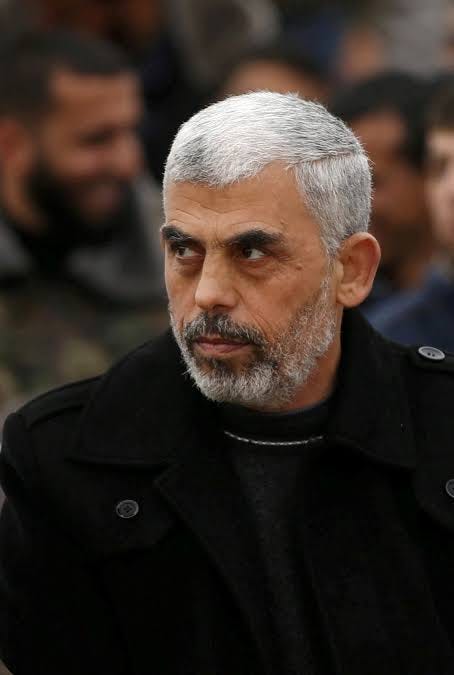
In February 2017, Yahya Sinwar, a militant hardliner with twenty-two years in Israeli prisons behind him, was elected the new leader of Hamas in Gaza. No one challenged him for the role.
Sinwar – widely known as Abu Ibrahim – was born in 1962 and grew up in the Khan Yunis refugee camp in the southern Gaza Strip. In the 1970s and early 1980s, Khan Yunis was a bastion of Muslim Brotherhood support, and while still in his mid-teens Sinwar became one of the organization’s most hard-core activists. The Brotherhood’s unequivocal message of insurrection as divine destiny inspired young Palestinians tired of the PLO’s flaccid secularism and corrupt ways. It offered them pride, direction, and self-respect amidst the squalor of Gaza’s camps, and its community support programs gave them an alternative to living off UN handouts.
By the time he was twenty, Sinwar had already served two brief stints in an Israeli jail, building his reputation as a Brotherhood loyalist and winning the confidence of Sheikh Yassin, who headed the organization in Gaza. Yassin was a renowned orator whose message captured the imagination of young Palestinian men. ‘There is no solution to the Palestinian problem except through Jihad,’ he told them, and they lapped it up, gathering in large crowds to hear him speak outside the mosque after Friday prayers.
Because rhetoric alone would not be enough, Yassin gathered around him violent young men to do his bidding. Sinwar was one of these. He helped Yassin establish a network of fighters to take up armed resistance against Israel – the group that would later become the Qassam Brigades, the military wing of Hamas. It was this early relationship with Hamas’s founder and spiritual leader, along with his ruthless ambition, that would fuel his subsequent rise in the organization.
In 1988, a year after Hamas was founded, Sinwar set up the group’s feared internal security organization, al-Majd, with the mission of punishing collaborators and those accused of moral offenses. In addition to hunting down and killing anyone suspected of collaborating with Israel, Sinwar also targeted homosexuals and shops that stocked pornographic videos. He had a penchant for close-quarters killing and often bragged of dispatching al-Majd’s victims with his own hands. He later told the Israelis that he punished a suspected informer by getting the man’s brother to bury him alive, finishing the job using a spoon instead of a spade.
By dint of such brutality Sinwar built Hamas’s security apparatus: a formidable network of spies and informants designed to protect the inner core of Hamas’s leadership from Israeli interference. He had by then acquired quite a following – Sinwar could be as charismatic as he was cruel and drew people to him in the way that natural leaders do.
In 1988, Sinwar was convicted by the Israelis for the murder of twelve Palestinians and given four life sentences. He was to spend the next twenty-two years in Israeli prisons. A year later, Yassin was also imprisoned for ordering the deaths of Palestinian collaborators – spending the next eight years of a life sentence before being released in 1997 as part of an agreement brokered by Jordan.
Three years later, with Yassin still at its head, Hamas launched the second intifada – which featured an unprecedented campaign of suicide bombings that resulted in over a thousand Israeli deaths. The Palestinians lost twice that number, but the bombings were regarded by Hamas, and by many Palestinians, as a success: the most effective way yet to redress the lopsided balance of casualties that had been a hallmark of Arab-Israeli clashes.
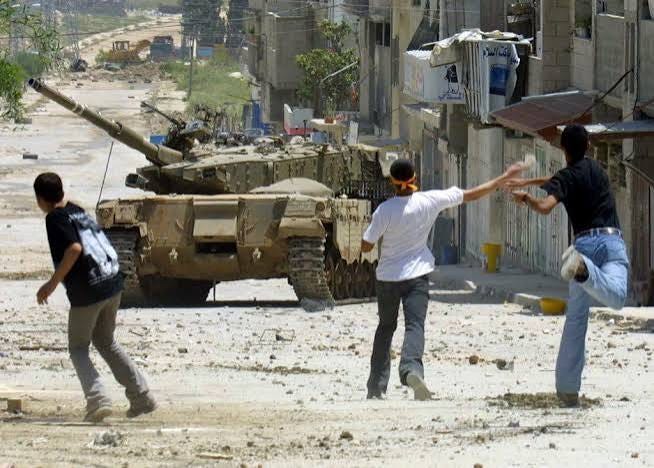
In 2004, Yassin was killed by a missile fired from an Israeli helicopter as he left the mosque after Friday prayers. His replacement, Abdel Aziz al-Rantisi, lasted less than a month before also being assassinated. It was perhaps fortunate for Sinwar – the man whose leadership of Hamas would lead to many times the number of deaths caused by both intifadas combined – that he was for two decades in the safest place for a man of his background and ambition: an Israeli jail. And it is a measure of his force of personality that far from rendering him irrelevant, Sinwar’s imprisonment enabled him to become the de-facto leader of Hamas among the prisoners. He negotiated on their behalf with prison authorities and enforced discipline among the inmates.
An Israeli government assessment of Sinwar during his time in prison described his character as ‘cruel, authoritative, influential and with unusual abilities of endurance, cunning and manipulative, content with little... Keeps secrets even inside prison amongst other prisoners… Has the ability to carry crowds.’
Sinwar used his time in jail to study his enemy, poring over books on Israeli politics and learning fluent Hebrew. He enrolled in the Open University to take classes in Middle East history, Israeli society, culture, and the foundations of the Jewish state. He also wrote a novel, The Thorn and the Carnation, based on his early life in Gaza. It was smuggled out of prison in sections and published in 2004. ‘They wanted the prison to be a grave for us,’ Sinwar said after his release. ‘A mill to grind our will, determination and bodies. But thank God, with our belief in our cause we turned the prison into sanctuaries of worship and into academies for study.’
Sinwar was released in 2011, one of a total of 1,000 Palestinian prisoners exchanged for a single Israeli soldier, Gilad Shalit, who had been captured during a 2006 cross-border raid and held by Hamas for five years. Sinwar had taken part in the negotiations that led to the swap. The circumstances of his release reinforced a salient lesson about his enemy: the Israelis would go to almost any lengths to recover one of their own.
Out of jail, Sinwar moved quickly to consolidate his power. He joined Hamas’s political bureau and took responsibility for coordinating with the Qassam Brigades, headed by Mohammed Deif. The two had known each other since the mid-1980s when both attended the Islamic University of Gaza. Deif had cut his teeth during the first intifada and developed a reputation as an expert in rockets and explosives. He had survived at least seven Israeli assassination attempts. He was the closest thing Sinwar had to a friend.
Sinwar was heavily involved, both politically and militarily, in Hamas’s seven-week war with Israel in the summer of 2014. At one point Hamas pronounced him dead – probably to deflect Israeli plans to assassinate him. He was, in fact, very much alive and helped direct operations from the tunnels beneath the strip. Deif survived too, though his wife, infant son, and three-year-old daughter were killed in an Israeli airstrike.
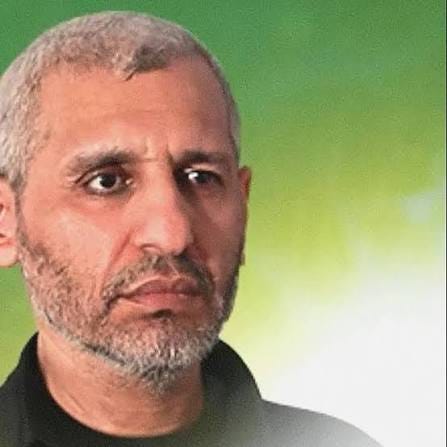
Mohammed Deif
The 2014 war burnished Sinwar’s credentials. Despite his small stature, he had a striking appearance – piercing eyes and a full head of snow-white hair – and was known within the organization as someone not to cross. Ismail Haniyeh, as head of Hamas’s political bureau, was the nominal leader, but deferred all operational decision-making to his more aggressive colleague. Sinwar was above all an uncompromising strategist. The cycle of rocket attacks and reprisals had kept the pot boiling but were not an end in themselves. He recognized that nothing would change unless Hamas could shift the fundamental balance of power – and this could only be achieved by launching a spectacular attack that would inspire Israel’s enemies to action. His ultimate goal was to strike Israel a debilitating blow from which it could never recover.
In 2015, Sinwar again assumed the duties of internal enforcer. He ordered and participated in the detention, torture, and killing of a Hamas commander, Mahmoud Ishtiwi, who was accused of moral crimes – amid suspicions of homosexual conduct – that Sinwar feared could lead to extortion and compromise the organization.
When he was elected leader of Hamas in Gaza in February 2017, Sinwar wasted no time. Within weeks he had begun to develop the plan that, six years later, would evolve into the 7 October attacks. His priority was to acquire the weaponry that would make it possible.
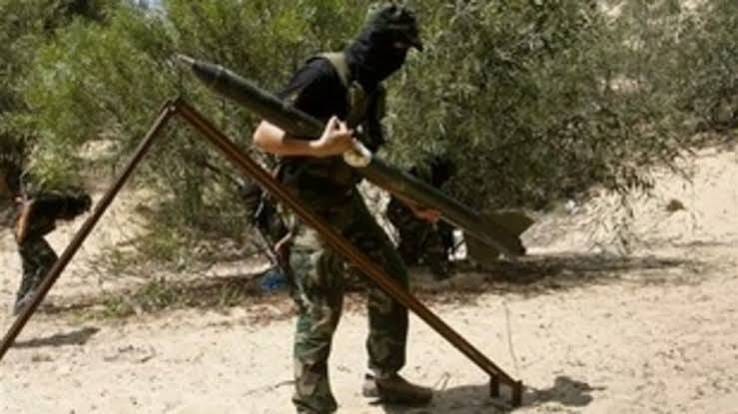
At his direction, Hamas began to build a massive arsenal – from rifles to long-range rockets and everything in between, including ordnance designed to target Israeli aviation and armor. Home-made weapons included a launcher capable of firing fourteen rockets simultaneously and the Zuwari drone, an explosives-laden aircraft used to strike Israeli observation towers and knock out cameras on 7 October. Off-the-shelf weapons such as AK-47s, RPGs, and anti-tank missiles were purchased in Egypt and transported through the tunnels – most sourced from the wars in Libya and Sudan and carried across the lawless Sinai before being smuggled into Gaza. Special effort was made to acquire machine guns, notably the Iranian-made PKM-T80, and the AM-50 Sayyad sniper rifle, which fires a .50-calibre round powerful enough to punch through up to an inch of steel. These were acquired from Hizbollah in Lebanon, who had obtained them from Quds Force operatives in Syria.
Rockets were harder to smuggle and so the majority would have to be made within the enclave. Iran was happy to help. ‘Everything you see of their missile capability has been supported by the Islamic Republic of Iran,’ declared General Amir Ali Hajizadeh, the commander of Iran’s IRGC Aerospace Force, in 2021. ‘Instead of giving them a fish or teaching them to catch a fish, we taught our allies and friends how to make a hook, and they are now in possession of missile capabilities and technologies.’
Hamas had already built thousands of short-range Qassam rockets with a range of roughly ten kilometres, though with capricious flight paths. In workshops built into tunnels and the basements of high-rise buildings, Hamas armorers trained by the Iranians used lathes to shape metal into rockets and mortars, packed with explosives made from fertiliser. They manufactured longer-range models based on Russian and Iranian designs – including versions of the Iranian 333-millimetre multiple launch rocket system and the homemade R-160, which carried a sixty-kilogram warhead and could reach Tel Aviv. A few could range as far as Jerusalem and Ben Gurion airport. Among the more sophisticated home-grown weapons was a copy of a Russian anti-tank rocket, the PG-7VR, specifically designed to defeat the reactive armor systems used on Israel’s Merkava main battle tanks.
Sinwar and Deif’s plan also required a vast expansion of the existing tunnel network – one that would enable freedom of movement for Hamas fighters beneath the full length of the strip while protecting them from Israeli firepower, and allow Hamas’s leadership to command and control the battle in a way that bypassed Israel’s superior ability to intercept communications. At Sinwar’s direction, Hamas operatives began digging a network of tunnels whose size and sophistication would exceed anything Israeli intelligence had imagined.
By late 2020, the conditions were set to move to the next stage of the plan: the selection and training of the assault force. In December of that year, Ismail Haniyeh announced that Hamas would hold a military exercise codenamed Strong Pillar – ‘a strong message and a sign of unity’ between Gaza’s various armed factions. The drills involved three groups in addition to Hamas: Palestinian Islamic Jihad, the Mujahideen Brigades, and Al-Nasser Salah al-Deen Brigades. All three would participate in the attacks on 7 October, but at this stage no one aside from Sinwar, Haniyeh, and Deif knew the true purpose of the exercise. This would be the first of four joint drills held over three years, each documented in polished videos posted on social media. They show scenes that now look familiar: heavily armed fighters breach a fence, overrun a mock tank marked with an Israeli flag, detain a crew member and drag him away as a prisoner. Other fighters raid buildings while masked commanders direct the action from a bunker.
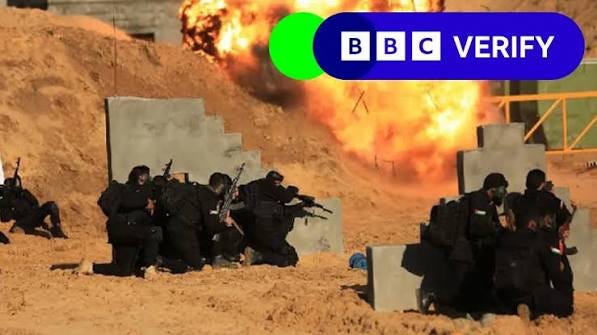
It was time for Sinwar to test his assumptions and probe Israel’s defenses so that the plan could be refined. In May 2021, Hamas launched the largest rocket barrage Israel had yet faced – watching the results not as a victory in itself but as an intelligence-gathering exercise. What Sinwar and Deif learned confirmed much of what they had suspected. The volume of rockets had come close to overwhelming Iron Dome but had not succeeded – too many had fallen short, and Israeli targeting had often struck launch sites before Hamas crews could escape. Deif formed specialized rocketeer units and trained them to minimise time on the launch site, pre-staging rockets and equipment at multiple locations. The Israelis had been identifying launch sites by plumes of smoke picked up by cameras along the border fence. Something would have to be done about those cameras. A few months later, watching Ukraine’s use of drones against Russian armor, Deif had his answer. He pushed for Hamas to acquire drones – from adapted Chinese quadcopter models to Iranian kamikaze variants – and formed dedicated drone units that practiced at a site in southern Gaza close to the beach.
Sinwar had also estimated correctly that Israel would not launch a major ground operation into Gaza in response to the 2021 rockets – a shrewd reading of his adversary’s tolerance for risk. This understanding undermined the threat of invasion as a deterrent and played directly into his calculations for what would follow.
The battle’s outcome reinforced for Sinwar the importance of Iranian backing. Hamas launched a charm offensive, working to overcome the obstacles between a Shia state and a Sunni Arab organization by emphasising their shared goals: the liberation of Jerusalem and the destruction of Israel. ‘Had it not been for Iran,’ Sinwar declared in a 2021 speech, ‘the resistance in Palestine would not possess its current capabilities.’
In letters written in 2021 and obtained by Western intelligence, Sinwar mounted a vigorous appeal to senior Iranian officials – including Supreme Leader Khamenei – for additional financial and military support, pledging that with Iran’s backing he could destroy Israel completely within two years. ‘We promise you that we will not waste a minute or a penny unless it takes us toward achieving this sacred goal,’ states a June 2021 letter bearing Sinwar’s apparent signature alongside five other Hamas officials. Writing to Ismail Qaani, commander of the Quds Force, he was specific about what he needed: $500 million in financial assistance paid in monthly instalments over two years, and Iranian training and equipment to support an additional 12,000 Hamas fighters.
In the letters, Sinwar did not reveal the full scope of what he was planning. US and Israeli intelligence officials believe that Iran and Hizbollah were surprised by the attack on 7 October, and angry at Sinwar for not disclosing his intentions in advance. But the destruction of Israel was their common goal, and Iran – having already provided hundreds of millions of dollars to Hamas’s military wing – increased its support through 2023. Implicit in Sinwar’s plan was the conviction that Hamas’s closest allies would fully join the fight once they saw the initial results.
At the end of 2021, Sinwar appealed again to Qaani. If Hamas received the help it needed, he told the Quds Force commander: ‘We are confident that we and you, by the end of these two years or during them, if God wills, we will uproot this monstrous entity. We, and you, will change the face of the region and end, God willing, this dark era of the history of our Islamic nation.’
Well Sinwar sounds like a terribly scary guy, I imagine the Israeli government regrets ever releasing him