
"You Warn Us About Everything"
The lead-up to 7 October — and the warnings that went unheeded

Everyone by now knows that Israel had warnings before 7 October. What’s less understood is how many there were, how specific, and how repeatedly they were waved off.
I’ve spent the past two and a half years working on a book about the war in Gaza — eight separate trips to Israel and the wider region, interviewing soldiers, intelligence officers, relief workers, politicians, and civilians on both sides of the conflict. The War in Gaza: 7 October and its Aftermath comes out with Pen & Sword later this year. This is its opening chapter — the intelligence failures in the months before the attack, told through the people who raised the alarm and the people who told them to stand down.
Chapter 1: Warnings
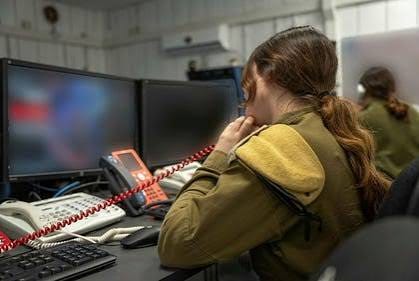
For two years, Menachem Gida, a communications hobbyist, had been listening to the wireless traffic of Hamas. He disseminated what he collected through a WhatsApp group called Field Security Operational Monitor. Time after time he reported Hamas combat personnel practicing the breaching of the fence, arriving from the sea, seizing hostages, razing kibbutzim.
He passed the information to the IDF, who told him these were not preparations for an attack but mere fantasies. Finally, in April 2023, the army restricted Gida’s ability to monitor Hamas wireless traffic. Despite this, he was able to discern an intensification of Hamas training, and that information was reported by Kan 11, the public broadcaster, a few days before the attack.
Gida’s warnings would have found a more receptive audience among junior intelligence officers of Southern Command and the Gaza Division. A few months before the 7 October attacks, intelligence officers from the lower ranks of both headquarters reported that Hamas had ‘broken routine,’ as they put it, and was preparing a massive raid on a local community or military outpost within Israel.
Since earlier that summer, protests by Palestinians along the Gaza border fence had become more frequent and much more violent than previously. A spike in violence occurred in September. The IDF’s field observers warned of unprecedented attempts by Palestinians to breach the border fence above the underground defense barrier. Intelligence analysts in Southern Command concluded that Hamas was testing the IDF’s response threshold. Their reports were dismissed by the senior intelligence officer for Southern Command, a Colonel A., whose real name has since been concealed by the IDF.
Then, in July, just three months before the attacks, a veteran analyst with Unit 8200 warned that Hamas had conducted an intense, daylong training exercise that appeared to be a rehearsal for a massive attack on communities outside the wire. Her warnings were brushed off by the senior intelligence officer of the Gaza Division, who viewed the exercise as no more than posturing. ‘I utterly refute that the scenario is imaginary,’ she wrote. ‘It is a plan designed to start a war — not just a raid on a village.’ Her warnings went unheeded.
Nevertheless, Southern Command’s readiness was increased. Additional infantry battalions were sent to the Gaza border, the Air Force was put on alert, and reserve intelligence officers were recruited. Mid-level officers in Southern Command and the Gaza Division urged their commanders to launch a pre-emptive strike on Hamas.
But Sinwar was a step ahead. Once he realized the Israelis were stepping up their preparations, the protests stopped. The IDF was now inured to the sight of crowds of Palestinians by the border barrier — and under cover of those protests, Hamas fighters had attached explosives at designated breach points in the fence.
As the protests stopped, and despite renewed warnings from junior intelligence officers within Southern Command, the IDF lowered its level of alertness during the first week of October and sent most of the troops elsewhere, including the West Bank. The number of battalions near the Gaza border was reduced from four to two. Two days before the attack, the Egoz commando unit located at Tze’elim base near the Gaza border was also sent to the West Bank.
At the last Southern Command intelligence assessment meeting, on 30 September, mid-level officers specifically warned that it was not possible to determine that the danger of a Hamas attack had passed. ‘You just concentrate on defending the area,’ they were told. ‘There’s no scenario in which Hamas can infiltrate Israel without us knowing about it.’
On the evening of 6 October, in the Shin Bet’s southern command in Ashkelon, agents noticed that dozens of SIM cards affiliated with Israeli cellular communications companies had simultaneously been activated across the Gaza Strip. These SIM cards were mostly linked to Hamas’s elite Nukbah commando force. A complex Shin Bet intelligence operation had made the tracking of the SIM cards possible: the middleman who had brokered their sale to Hamas had been recruited by Shin Bet for this purpose. Hamas had no idea that the activation of specific SIM cards in Gaza was seen by Israeli intelligence as a preliminary sign of a limited raid inside Israel.
In hindsight, the information seems startling. Yet at that moment it was inconclusive, mainly because it was not the first time the Nukbah had activated their Israeli SIM cards. Past activations had only turned out to be training exercises. This was Shin Bet’s assumption in the early hours of 7 October - though the number of sim cards activated now far surpassed similar incidents in the past. As with so many other indications that went unheeded, effective collection was undermined by limited imagination. No one in Israeli intelligence had imagined a raid involving hundreds of militants. They might have thought differently had they been listening to the traffic on Hamas’s handheld radios. But Unit 8200 had stopped eavesdropping on those networks a year earlier.
The assumption was that if Hamas was preparing for an infiltration, the Nukbah would descend into approach tunnels – tunnels enabling them to move close to the border fence undetected by IDF spotters – which would cause their phone signals to disappear. When Colonel A. of Southern Command contacted Unit 8200 and Shin Bet, he was told that Nukbah cell phones were still within range. Both agencies firmly stated that the Nukbah forces had not vanished; on the contrary, they were going about their routine activities. According to Southern Command’s warning model, the SIM card activations did not indicate a raid. In the early hours of 7 October, Colonel A. called his commander, Major General Finkelman of Southern Command. ‘I detect that the other side has increased alertness,’ he told him, ‘but I don’t understand why.’
Meanwhile, the Nukbah fighters were moving to their assembly areas – above ground. At that point, even they were unaware that within a few hours they would be launching a war. The order only reached them around 4:00 a.m., during prayers at the mosques. Even then, the Nukbah did not enter the tunnels. Instead, they stormed Israel en masse, above ground, taking with them mobile phones with Israeli SIM cards.
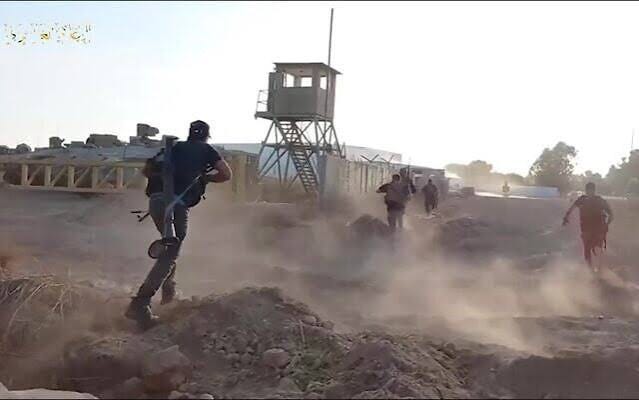
Shin Bet deemed the indications sufficiently serious to dispatch a team from the Sayeret Matkal to the area, notifying Southern Command and the Gaza Division that they were doing so. No one in the operations rooms of those two units informed the spotter units – comprising dozens of young women at the Kissufim and Nahal Oz bases.
At the Nahal Oz base – a tiny outpost atop a hill less than half a mile from the fence – a spotter named Noa Marciano was startled to see an unfamiliar man standing in front of one of the barrier gates erected at intervals along the border. Palestinians were not allowed within 300 metres of the fence. It was 3 a.m. on the morning of 7 October. Noa called headquarters and, eyes fixed to her screen as she spoke into the mouthpiece, described what she was seeing.
In the months leading up to the assault, Noa and her colleagues had seen growing signs of something afoot. They observed convoys of twenty to thirty white pickup trucks filled with Hamas fighters driving along the border with increasing frequency, stopping occasionally and peering into Israel through binoculars. Drones launched from within Gaza flew over their outpost several times a day. The spotters reported this activity, but when they speculated about what it meant, they were told by their superiors that their job was to be the eyes, not the brains, of the Israeli military. That was the only feedback they received.
Noa was surprised when, about thirty minutes after she delivered her report, a tall, angular lieutenant colonel mounted the metal stairs leading to their outpost and strode purposefully into the operations room where she and her colleagues sat in front of their screens.
Lieutenant Colonel Meir Ohayon was the battalion commander of the 51st Battalion of the Golani Brigade. ‘I’m sorry I had to wake you at this hour,’ Noa said to him, ‘but I still think there’s something strange here.’
‘Not at all,’ Ohayon replied. ‘Better to be vigilant than caught by surprise.’
Noa pointed to her screen. The man was still standing by the barrier gate. She zoomed the camera into focus on his face and flinched. He was looking directly at the camera – although she knew it was impossible for him to see it at that distance in the dark.
Ohayon left the operations room and climbed a short distance to the crest of the hill, pausing to load a tear gas canister into the launcher on his weapon. He was surprised to see the man still standing in the same place, as though waiting for something. Ohayon gauged the distance and, pointing his rifle above the man’s head, pulled the trigger. There was a loud pop as the canister shot upwards into the night sky, then – seconds later – landed, bounced, and hissed, releasing clouds of white gas that roiled and blossomed in the harsh glare of the barrier lights. The man turned and walked unhurriedly away from the barrier to an area of high ground right on the boundary, a spot known to be used by Hamas as a lookout point.
Noa was following him with the surveillance camera as Ohayon stepped back into the operations room. She could see now that there were several other figures standing there. They were discussing something – it looked like a military briefing, with one man standing with his back toward the fence while the others gathered around listening. Ohayon watched briefly but appeared unperturbed. He thanked Noa and left.
The phone on Noa’s desk rang. It was the duty officer at Re’im, home to the Gaza Division. He was clearly not happy that a battalion commander had responded to Noa’s report.
‘You warn us about everything,’ he said. ‘You speak to me first before you mobilize any more troops.’ He hung up.
Noa was angry and shared her frustration with her fellow spotters. ‘You warn us about everything?’ one of them said. ‘Isn’t that our job?’ They laughed.
At 4:00 a.m., the Gaza border communities were placed on alert. Still no one thought to tell the spotters – who were unarmed. Doing so would have enabled them to draw weapons from the outpost armories, which remained locked in accordance with standing orders.
At 5:00 a.m., spotters at Nahal Oz reported seeing people touching the border fence. Ohayon responded by sending a patrol in jeeps to investigate. When he reported the incident to his higher headquarters, he was told to recall the patrol ‘because of the risk of anti-tank fire from Gaza.’
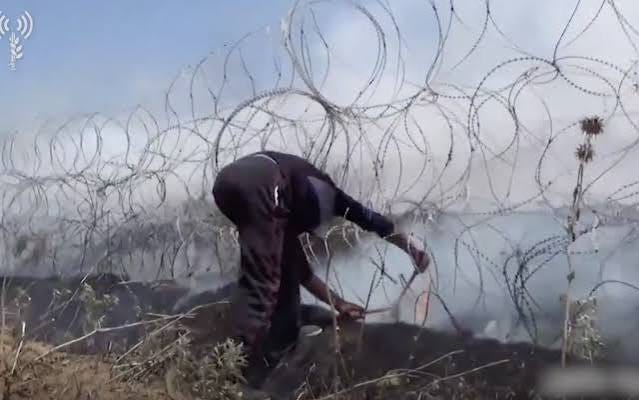
Noa watched the jeeps’ tail-lights disappear and turned back to her screen. She logged the observation, filed the report, and sat back.
At 6:15, to the east, the first signs of day glimmered on the horizon. The metal rooftops and concrete walls of Gaza emerged slowly in the gray light.Noa could no longer see the men standing beyond the fence, but felt instinctively that they were still somewhere nearby. A dog barked — then another — an agitated chorus that spread along the fence line and died away.
Then the first rocket arched into the sky.
Postscript: what happened to the spotters
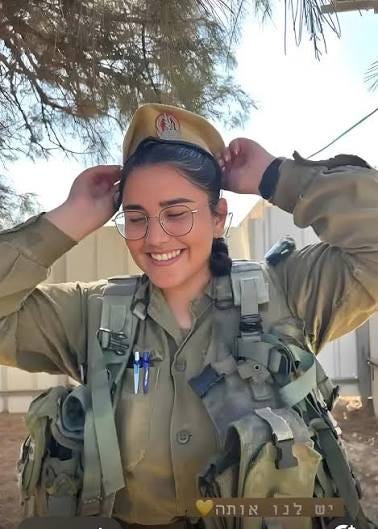
Noa Marciano died in captivity. Fifteen female observers were killed at Nahal Oz that day, out of fifty-three soldiers killed at the base in total. Ten more were taken hostage, seven of them observers — Noa among them. One was rescued within weeks. Five spent more than a year in Gaza before being released in a hostage deal. Noa did not come home.
Looking forward to buying the book, Andy: Your analysis always makes me smarter and helps me decide. Thanks, and S/F!